What now? You’ve spent so much time and care developing your craft, slaving away at a project only to run into a simple question—what now? For some, it’s an exciting question full of possibilities for cold emails, events, and social media, but for others starting from zero is daunting. The internet has undoubtedly offered increased accessibility, but the landscape is saturated, highlighting the importance of curated platforms and developed professional networks to gain visibility, publish, or get your foot in the door.
Understanding the gaps between academia and the professional world, the Milieux Institute has launched Milieux ArtReach, a curated platform meant to bridge those gaps for its many artist-researchers. In its current pilot-stage, Milieux ArtReach displays works and profiles from nine emerging artists from the Indigenous Futures, Textiles + Materiality, TAG, Speculative Life, and LePARC clusters.
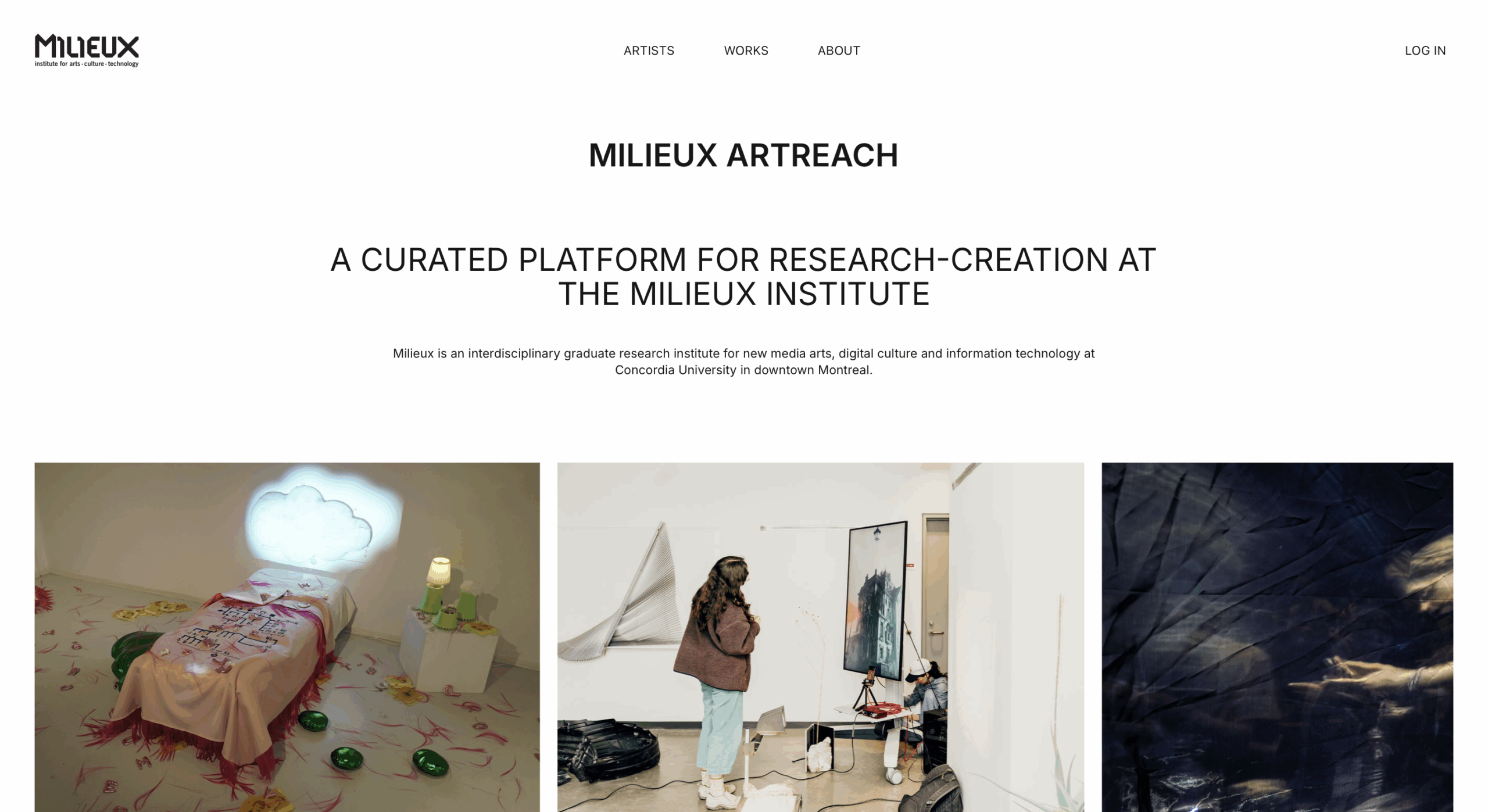
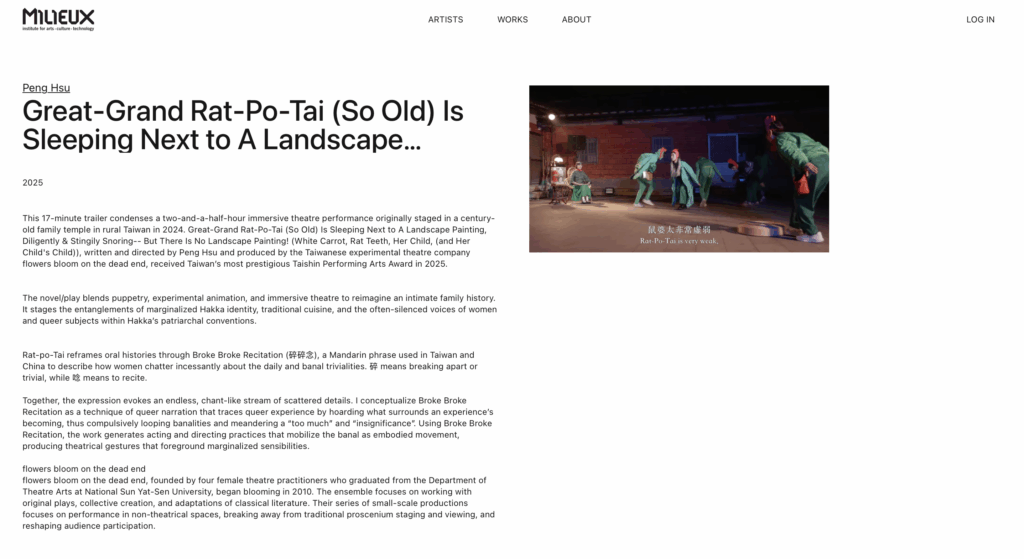
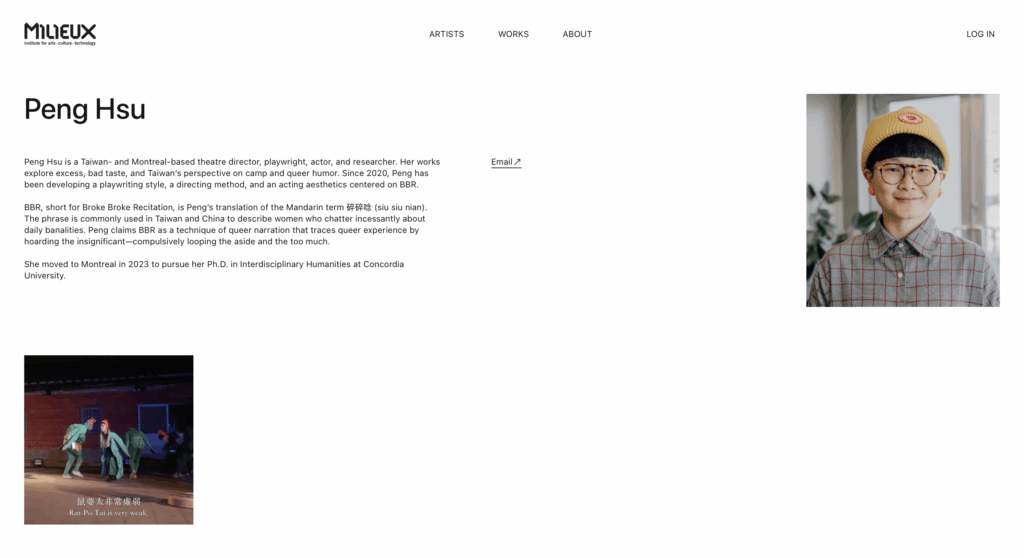
Milieux ArtReach was unveiled just in time for MTL Connect 2025, an annual international event organized by the nonprofit Printemps numérique (Digital Spring), gathering artists, curators, entrepreneurs, researchers, and other professionals to explore the digital revolution. Recognizing the Institute as a hub for digital artists, Milieux became an indispensable stop for international curators invited by Printemps Numérique.
After last year’s edition, Milieux Director Bart Simon noted “Students don’t always know how to present their work to a curator in a way that the curator can make quick judgements. If they’re planning an exhibition, or they’re applying for funding and they’re trying to think about who to fit in, there’s certain kinds of information that curators need quickly to make their decisions.” Game developer, musician, and a Ph.D. candidate Vadim Nickel said, “Putting together that description helped me define the work for myself and see what I’ve done so far and where it is that I want to move with this.”
Ophélie Queffurus, the Institute’s Head of Communications, conceived of Milieux ArtReach after observing the success of last year’s event. In 2024, details about the works and the artists were made available to the public and curators via a PDF document accessible by scanning the exhibition signage. This ensured that artist profiles remained available to the audience beyond the event—a crucial element for establishing potential future collaborations. As expected, Milieux pushed the idea further by creating an online platform that responds to the need for a more scalable and robust version of the initial project. Over the summer, undergraduate student and web designer Anna Huang and TAG member and computer scientist Muhammad Shahrom Ali worked together to bring Milieux ArtReach to life.
Inspired by the Faculty of Fine Art initiative, Collection Art Volte, the platform aims to give greater autonomy to students, who can upload multiple projects and edit their profiles, thereby offering enhanced visibility to the full scope of their practice to the Milieux Institute’s diverse and global network. While the university provides students with opportunities to disseminate traditional research through conferences, talks, and papers, such opportunities are more limited for research-creation. The platform aims to remedy this by providing students with an online space to promote their work and an opportunity to think about how they present themselves and their work to the cultural sector.
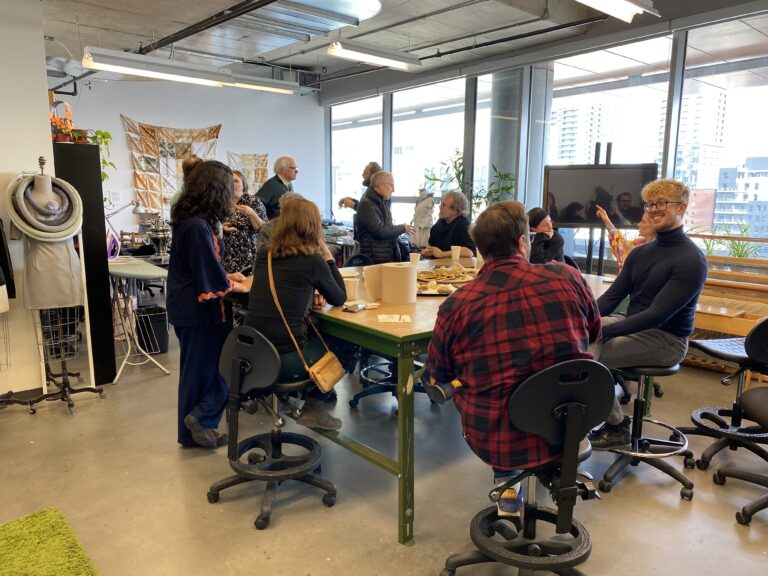
As part of the 2025 edition of MTL Connect, the Milieux Institute hosted a 5 à 7 networking event, an opportunity for members to display their work and connect with a delegation of international curators and industry professionals from France, Belgium, Denmark, Qatar, and Martinique. During a speech, Simon described Milieux ArtReach as “a living catalogue, dynamic, and changing,” highlighting its ability to connect people and showcase talent but also its role for emerging artists learning how to present and discuss their work.
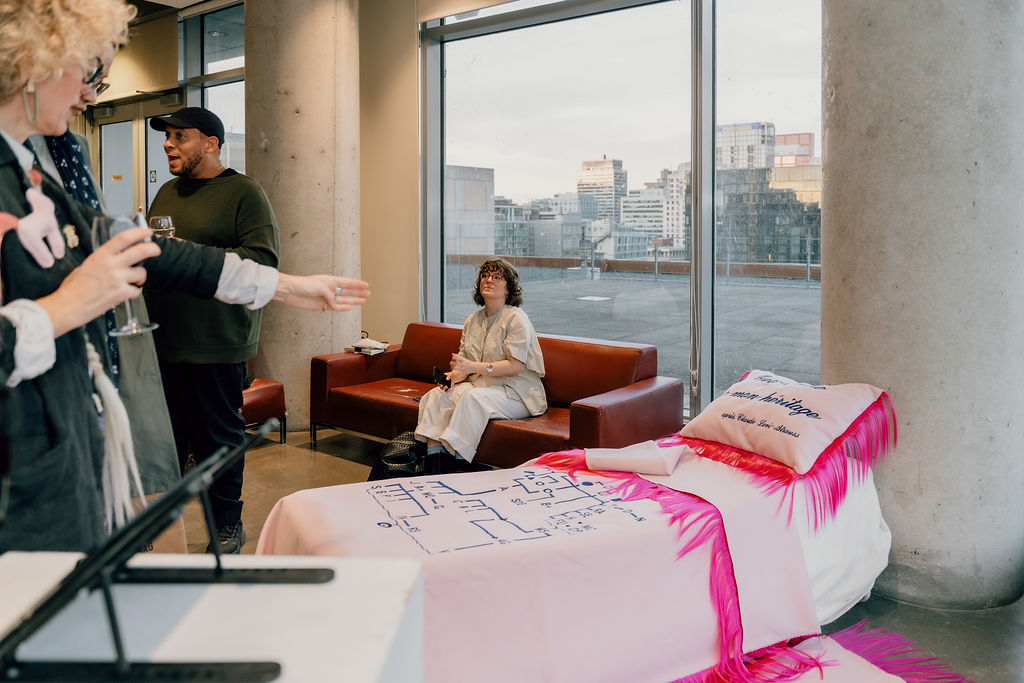
The delegation was brought to the EV building’s 11th floor atrium to explore what a new generation of interdisciplinary, experimental artists have to offer. The 5 à 7 offered a veritable picnic for every sensibility and background, representing the scope of Milieux’s talent. While the event provided excellent opportunities to network between curators and artists, it also provided a rare opportunity for members of Milieux’s various clusters to witness work from other clusters, opening the possibility for new and exciting collaborations.
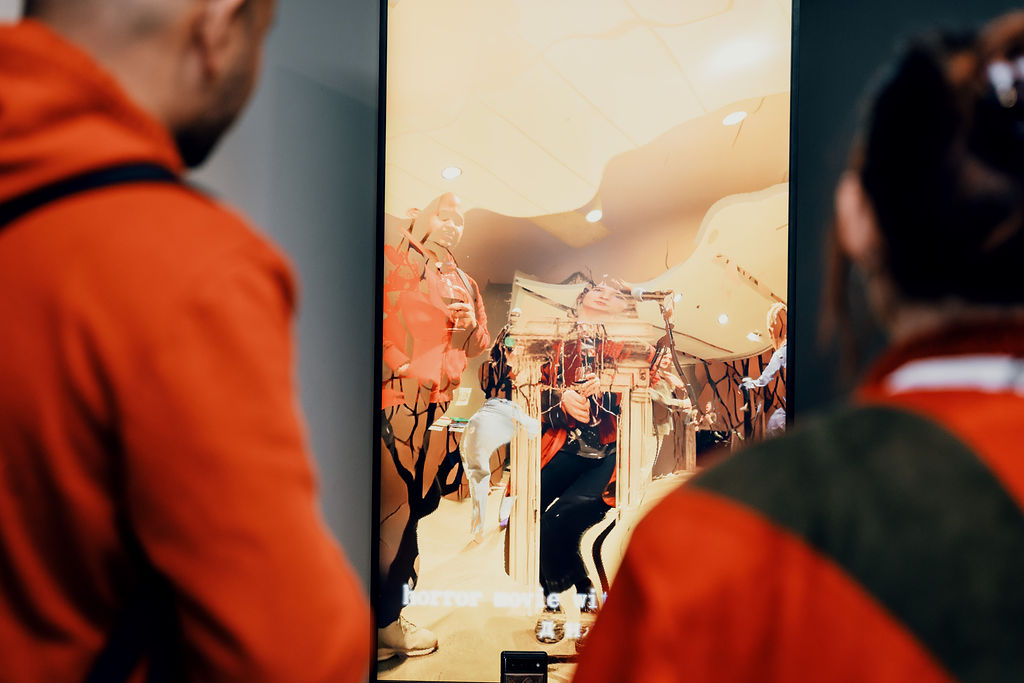
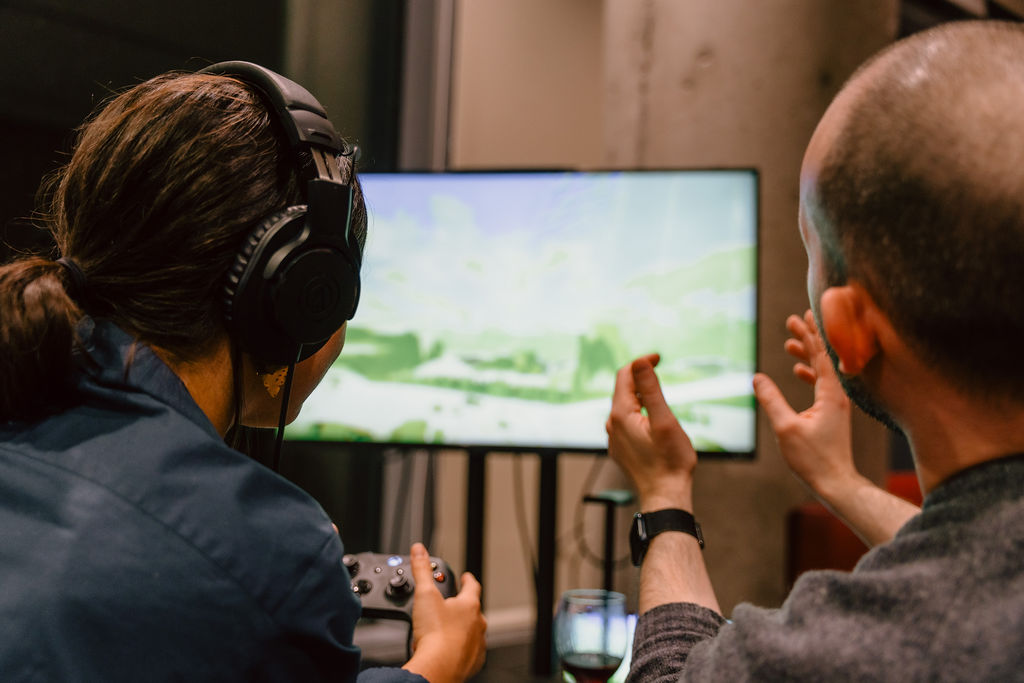
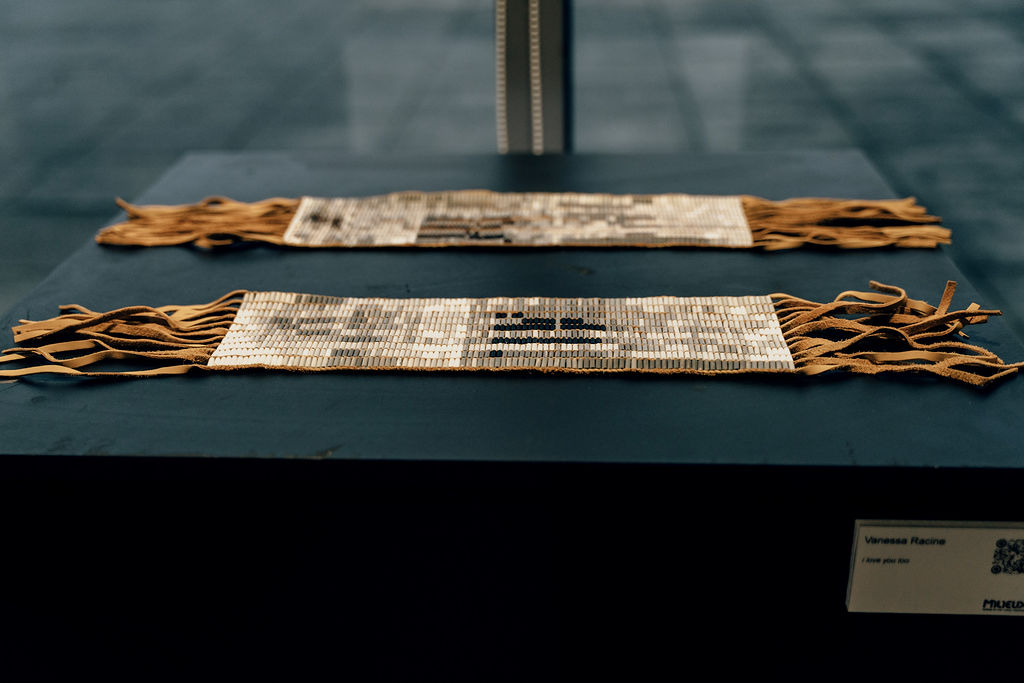
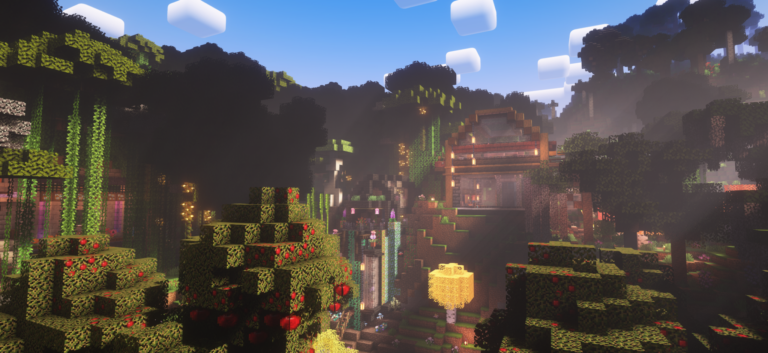
Visitors were immediately greeted by François Lespinasse’s Mechanical Meanderings: An AI-Driven Poetic Mirror, which had visitors captivated and playing with their distorted reflections through verbal prompts and movement. A previous version of the mirror had been presented at the 2024 edition, making viewing and interaction particularly rewarding. Vadim Nickel guided “noobs” into his exploration-focused otherworldly first-person game Zolar – The Gaia Directive. CLUCA’s Geography of my heritage commanded a corner overlooking downtown Montreal, using textiles, video, and sound to explore her early memories of the 1986 Chernobyl nuclear disaster. Vanessa Racine (Vanny) presented contemporary versions of wampum belts, previously presented at the Nostagain Symposium. The belts incorporate spectrograms of the phrase ‘i love you’ in Anishinaabemowin and French, representing the artist’s dual heritage.
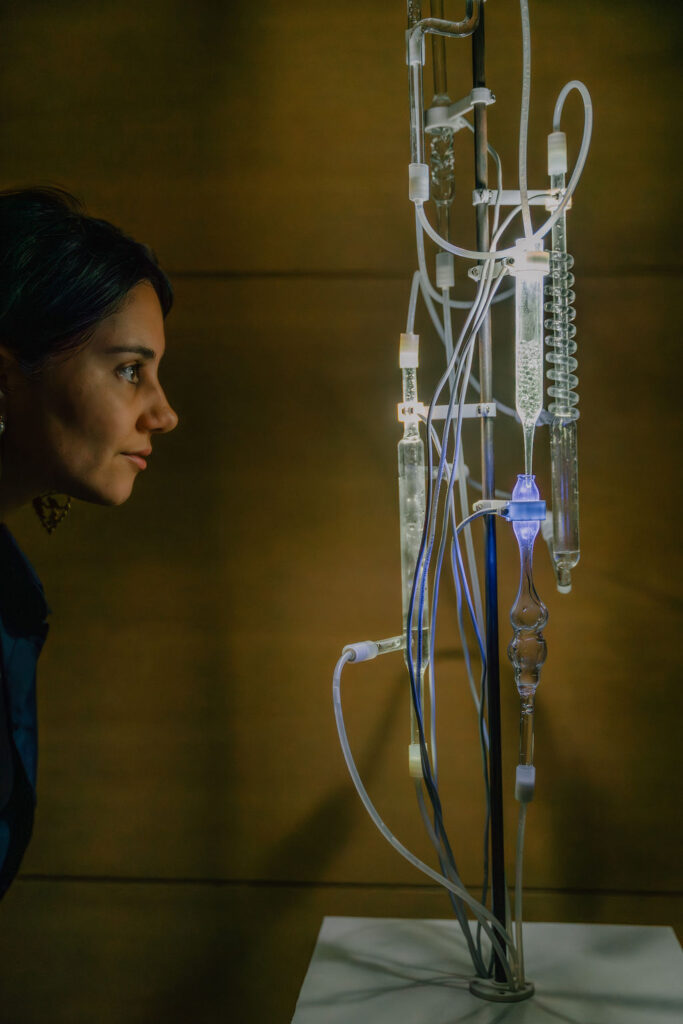
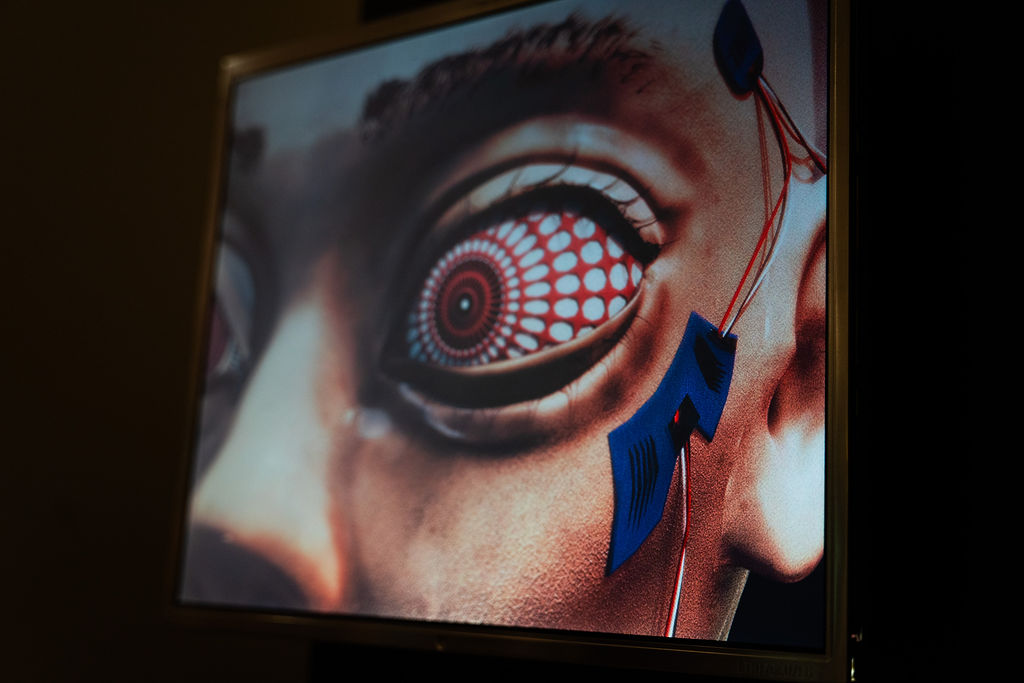
After grabbing drinks and snacks, visitors were confronted by Maxime Perreault’s Odo’s Mechanical Eye, which uses animation, a robotic eye, and stimuli-data to extend the reach of a digital entity from cyberspace into our physical world. Once the sun had set, Philippe Vandal’s sculptural installation para-instrumentarium #1 was the light of the event, as fluorescent and phosphorescent pigmented liquid cycled through scientific glassware.
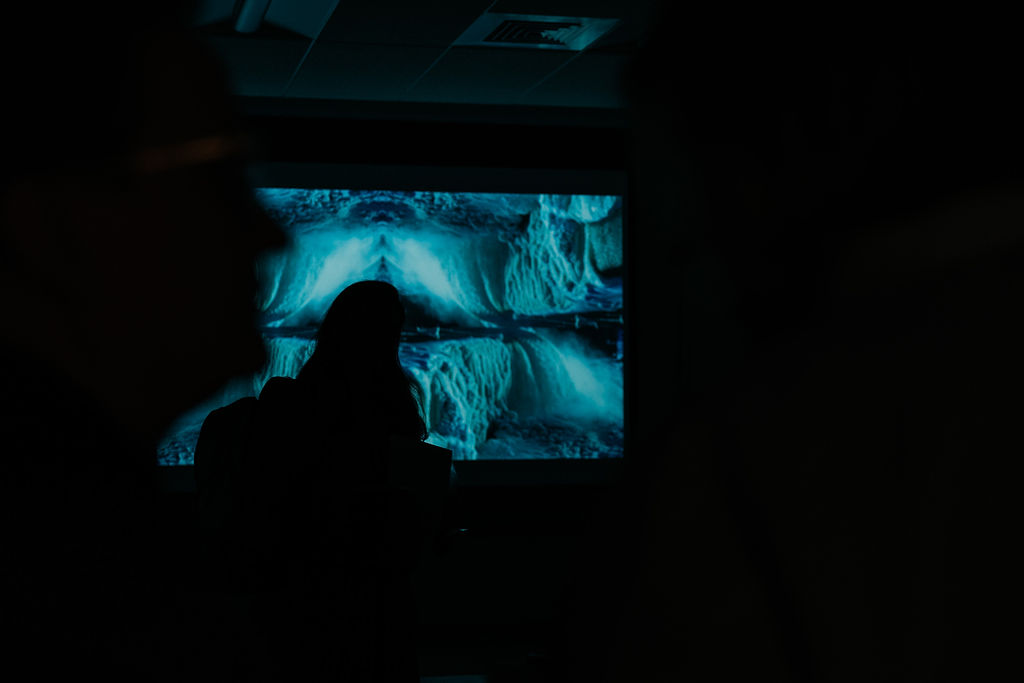
Nestled deeper in the 11th floor was Falls, a powerful audiovisual installation and “ecological and memorial project” created by LePARC co-director VK Preston, in collaboration with UG Fellow Valentina Plata, and part-time faculty Kasey Pocius, inviting visitors to pause and reflect, Falls offered a haunting reprieve from the buzz happening down the hall.
As visitors navigated the 11th floor, they were invited to discover and explore Milieux ArtReach to learn more about the works and the artists and contact them directly to provide feedback or discuss potential collaboration.
Following the event, CLUCA connected with a curator to discuss potential collaborations, while Vanny reflected that meeting curators gave them perspective on how to present their work, “I always found it was hard to explain my work because, you know, wampum belts, not everyone knows about them. So seeing a different perspective and how others view it was really insightful for me.”
Vadim Nickel was surprised to discover that his game seemed to resonate the most with non-gamers, appreciating the feedback from other disciplines. “I’m still looking for ways to make my work more accessible,” he added.
After a successful launch evening, the platform’s long-term success now rests on the engagement of the student community. Milieux encourages its student members to create profiles and document their projects so that Milieux ArtReach fully reflects the creativity that drives the Institute.
– Nadia Trudel, Milieux Storyteller