
I’ve recently been experiencing a little bit of a dilemma.
My professional foundation is journalism, which taught me to be objective, independent, and competitive. Journalism, like many fields, is fast-paced, hierarchical, and results-based. It’s also extractive by nature. Journalists enter lives and communities, get the story and they leave. Researchers operate with many of the same standards and ethical rules which help to preserve integrity, avoid bias, create boundaries, and minimize harm, but practice is always more complicated than theory. How can you navigate the same spaces and communities in both personal and professional capacities? What kind of exchange happens between a journalist and a source, what do they gain and what do they lose? What is lost in competition and power dynamics? As I start working on my thesis and enter leadership positions, these types of questions feel increasingly relevant.
Since I first started interacting with LePARC back in September 2025, I’ve been drawn to their approach; slow, horizontal, embodied, experimental, collaborative, human, and attentive to the process. Co-Learning Score for Artistic Research #1, is a project that’s all process. Initiated and directed by LePARC co-director Lília Mestre, Co-Learning Score for Artistic Research #1 describes the 2024-2025 Score Practice undertaken by Mestre, co-director V.K. Preston, Allison Peacock, Christian Brun del Re, Erin Hill, and Kristian North. Together, their practices and disciplines include contemporary dance, theater, writing, music, performance art, dramaturgy, butoh, life drawing, horticulture, and history.
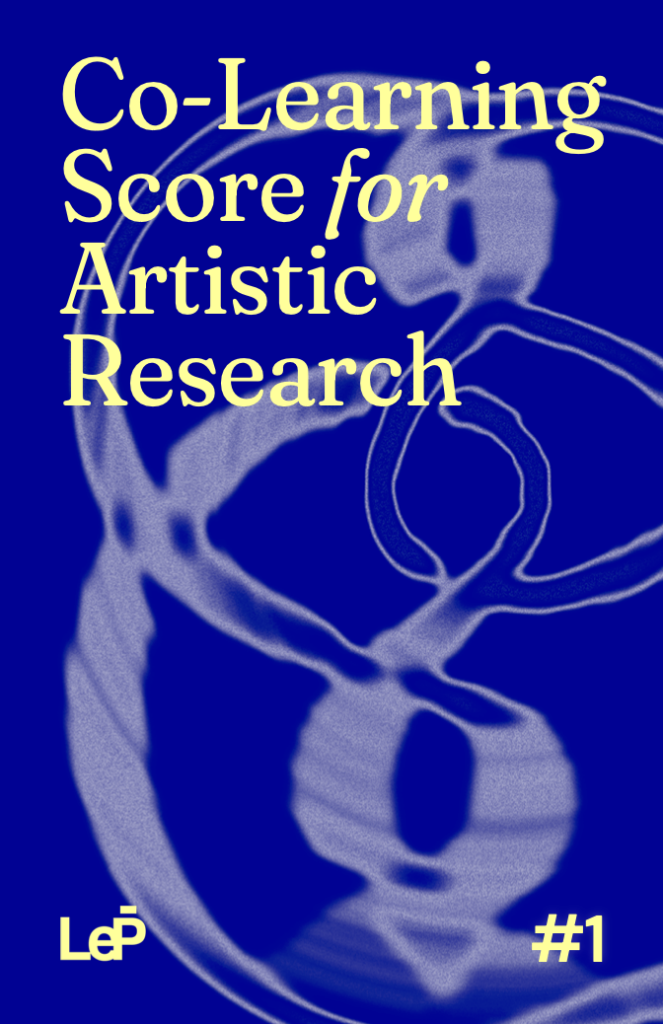
From September 2024 to April 2025, the group would meet for 2 hours on Fridays at LePARC’s Performance Lab to present 10 minutes of their research-in-progress. Participants took notes and refrained from discussion between presentations. The only audience-members were fellow presenters. The sessions ended with members paired at random to send each other guiding questions in the form of a letter to a friend. A second iteration of Score Practice is set to start in October 2026.
“This recursive structure allows for inquiry to evolve collectively, moving through spirals and tentacles rather than straight lines, tracing the artistic practice and the critical processes in equal importance,” Mestre writes on page 6.
In conversation, she tells me the idea for the Score stemmed while she was working in Brussels, “Co-learning was a quite an important factor of the school and I think it comes out of the idea of the score in choreography as a kind of a way of designing difference. Every participant is different and every participant is contributing something and every participant is in attention to the other participants, and the idea that for one to contribute to another one needs to have curiosity, engagement, and solidarity.”
Inspired by Isabelle Stengers’ concept of an ecology of practices, Mestre carefully designed the Score to be a hideout, “an artistic artificial friendship playground” she writes, where people with different interests and references must create a common value system and show up for each other in order to progress.
As described in an afterword by Kristian North, Stenger’s ecology of practices is a field “where practices interact on equal terms, resisting the tendency for one to dominate another. Practices in this staging are dynamic organisms, each with its own methodologies, objectives, and realities, and their active resistance is a necessary component of ecological harmony.” (140)
“I was thinking, okay, this is maybe a good way for me to frame what are the values involved in this kind of learning process,” Mestre explains, “so let’s say: dedication, curiosity, being bold, commitment… the values of friendship, right?” You might not become friends in the process, but you can work together as friends. And like any good friend, you support each other, but you can also challenge each other.
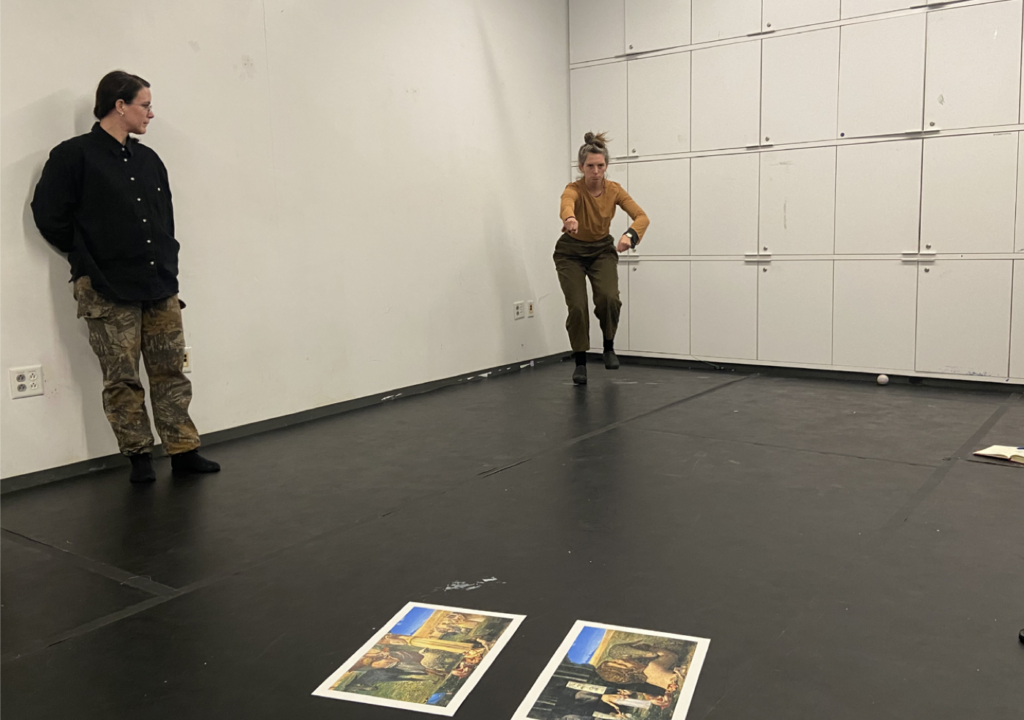
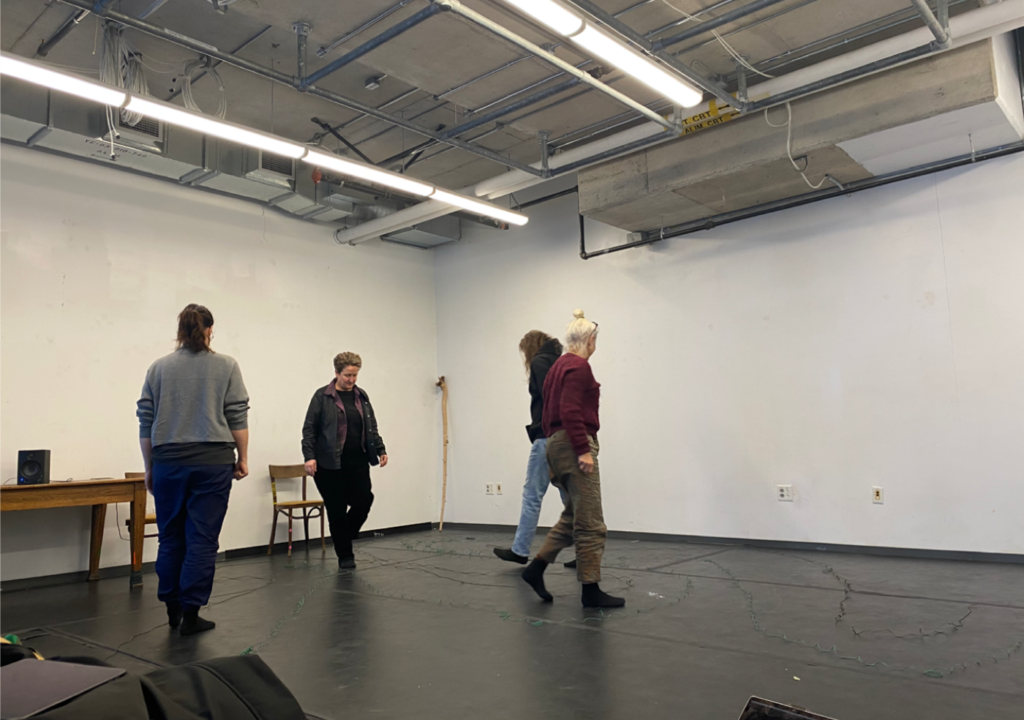
While the group consisted of graduate students, post-graduate students, and professors, the group’s functioning made it inherently horizontal. “It’s a vulnerability to share work. So for the other person to see your work and not share anything is unbalanced… We are all vulnerable,” Mestre smiles. Teachers and students have different responsibilities, but as Mestre conceives, “The teacher and the students are in the same plane of awareness and of knowledge.”
The lack of immediate feedback, although initially nerve-wracking, prevented the group from developing a single hegemonic understanding, instead taking a few days to develop their ideas and develop a question sent in their letter to a friend.
Workshop formats typically ask participants to make quick judgments to offer critiques and suggestions, the Score places value on impressions, references, poems, pictures, even games, which aren’t always so concrete and productive in the conventional sense.
Introducing Co-Learning Score for Artistic Research #1, Erin Hill compares the collective editing process to marginalia, the historic practice of writing in the margins of a book before gifting it to someone, forging intimacy by creating a shared understanding of the text.
Hill writes that, “Score Practice created a space to move otherwise within the university: unproductive in the traditional sense, wayward, accumulating around the margins, a practice of marginalia in which our time and labor at the university does not correspond to what the institution designed itself for, and which might even be, in the eyes of the university, a waste of time. One can hope, at least. May this book be a waste of time in their eyes, but in your eyes, friendly reader, may it be a movement we carry through together, anew.” (11)
Traditional practices and alternatives like the Score have their differences, but I think with some effort, I can find the intersection where I can be professional and human, learn and teach, give and take, and collaborate without compromising.
– Nadia Trudel, Milieux Storyteller