The Speculative Life research cluster alongside the Hexagram Network (Chantier Ecotechnologies) are pleased to announce a series of knowledge mobilization events; collaborative approaches to materials & methods which bring together the very different research areas of the Ethnography Lab, Machine Agencies, Critical Anthropocene Research Group, and the Biolab.
Please join us for a celebration of all things Spec Life!
Environmental Materials and/as Methods Keynotes and Roundtable
.
📅 May 7
⏱️ 12:30 – 6 PM
📍 Speculative Life cluster commons EV 10.625
ALL ARE WELCOME!
.
Program:
Chantier Ecotechnologies and Speculative Life Cluster are pleased to welcome interdisciplinary researcher Heather Davis (United States) and independent curator Juliette Bibasse (Belgium).
12:30 – 2 PM | Heather Davis Keynote: Producing Plastic Air
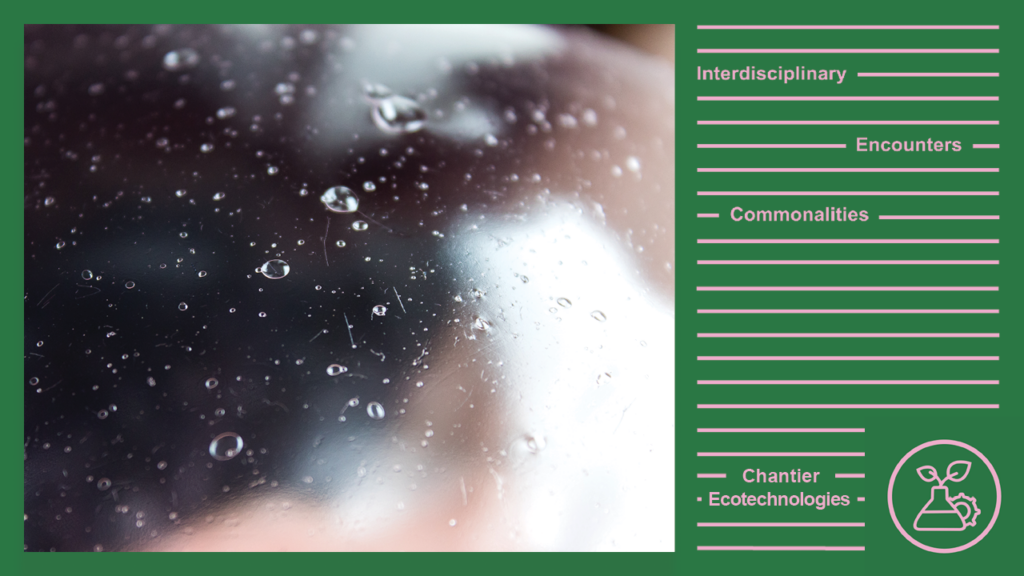
Heather Davis talk will explore how one plastic cup factory produces plastic air, and the consequences for how we think about waste, plastic, air quality, and bodily knowledge. Highlighting workers’ experiences in plastic production and decentring narratives of individual consumer choice, her work draw attention to petrocapitalism’s structural violence, where harmful environmental conditions have been normalized and integrated into what it means to build a life in the image of the American Dream. She will explore this through the concept of “private air,” showing how air quality is monitored differently in workplaces than in the general environment.
3 – 4 PM | Juliette Bibasse Keynote: Creating at Large – Prototyping off the grid & slowing down
Juliette Bibasse & Joanie Lemercier crossed the Atlantic in March 2026 aboard a sail cargo vessel, slowly travelling for two weeks from France to New York without flying — a deliberate choice made in response to the environmental cost of air travel. A series of works has been made on board, in direct response to the physical experience of wind, waves, storms and swell, ever-changing light, shadows and reflections, transcribing moments of the ocean into thousands of ink drops and pixels.
At sea, you cannot trust data, even on a high-tech vessel full of sensors. You must observe reality. This journey was a wonderful context to question our growing tendency to use technology to sense the world rather than experience it directly: all the computing power in the world will never be sufficient to model a single drop of water.
In this presentation, Juliette Bibasse will share some of their recent works, the motivations behind this journey and the embodied experience they got from it. Through their studio works and the Concordia University Solar Lab, their goal is to share a critical understanding of technology and to propose desirable alternatives. They believe the future should not rely on robots and datasets, as these fragile systems feel more like disposable gadgets than a serious roadmap for the future.
4:30 – 6 PM | Roundtable Unsettling Sediments: Site-responsive, collaborative inquiry, and public engagement
This round table explores the material and methodological dimensions of a collective bio-based book-making process at the Speculative Life Biolab. Since fall 2025, the group has engaged in an art–science collaboration in Victoriaville, where sediment accumulation in the Réservoir Beaudet is increasingly threatening access to drinking water. The limited-edition artist’s book is being produced using locally collected sediments, algae, and plant matter, and functions both as a research outcome and a site-responsive medium. The discussion will examine how its fabrication and writing operate as a sensory, collaborative method of inquiry, as well as an ecotechnological form of engagement and public knowledge production.
Environmental Materials and/as Methods: Student Workshop
.
📅 May 7: 11 AM – 12 PM
📅 May 8 : 9 AM – 4 PM
📍 Speculative Life cluster commons EV 10.625
.
How to mediate the banal?
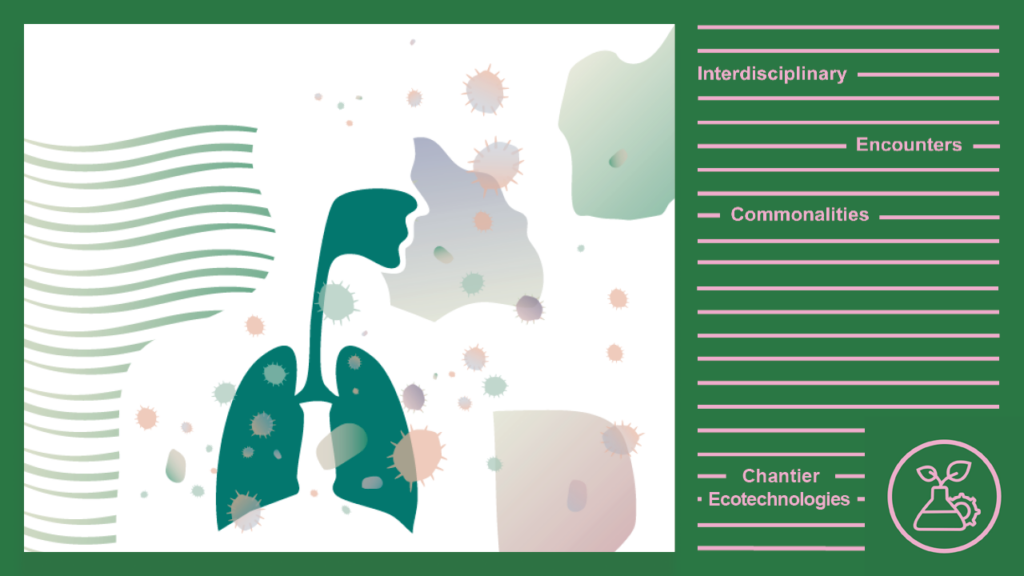
Inspired by Heather Davis’s forthcoming piece, Banal Violence: Breathing Plastic Air, this two-day workshop organized by grad students, invites participants to investigate materiality as both object and method of study. Together, we will critically engage with the question of material banality through hands-on investigation and collective creation.
Inspired by Rob Nixon’s seminal concept of slow violence, Davis switches ‘slow’ for ‘banal’, to focus the attention not only on the temporality of environmental violence, as incremental and accretive, but also on its affective and bodily registers. Toxicity scholars have shown that slow violence is both a direct experience and something needing mediation to be understood. We argue that this hard-to-perceive slow violence is even more difficult to communicate when it is also banal.
As part of our commitment to exploring creative strategies for mediating banality, we invite students, scholars, and practitioners to investigate everyday material encounters across Montreal in a workshop. Participants will collaboratively act as gatherers, employing biomaterial capture methods to identify cues of banal violence across the city. Back at Spec Life, groups will interpret their collected data using a range of methodologies familiar to different groups in the cluster, including multimodal ethnography, CLEAR Lab’s DIY microplastic forensics protocol, and microscopy/material analysis. Following this, participants will synthesize their insights through a series of speculative map-making exercises, attempting to situate their discoveries in relation to time and space. The workshop will culminate in the co-production of speculative analog and digital maps, making visible some of the manifold forms of banal violence present in the city of Montreal.
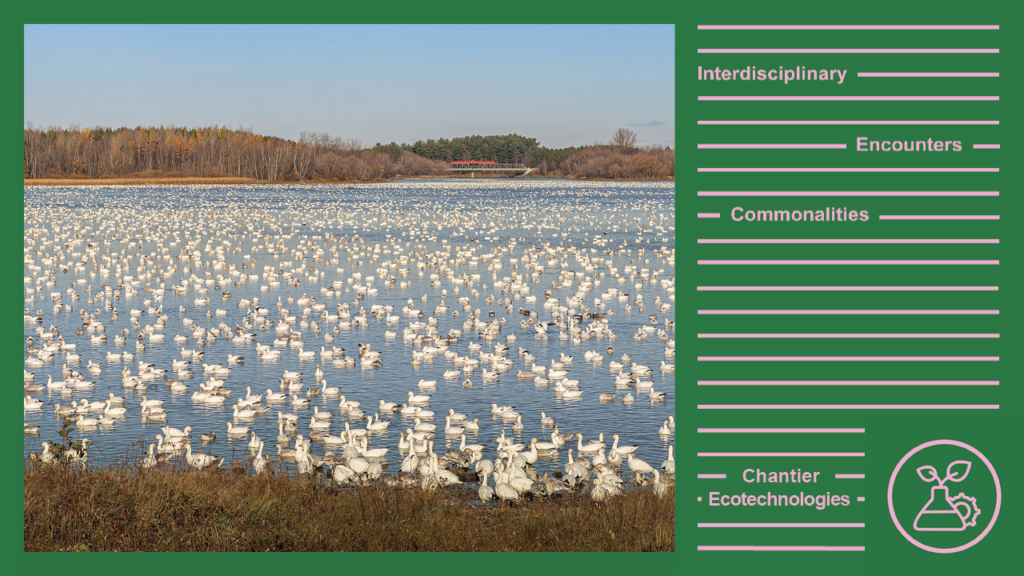
Closing Remarks of the “Environmental Materials and/as Methods” Series
.
📅 May 8
⏱️ 4 – 7 PM
📍 Speculative Life cluster commons EV 10.625
.
Together with the Speculative Life Research Cluster, the Hexagram Chantier Ecotechnologies warmly invites you to join us for the closing remarks of the knowledge mobilization series Environmental Materials and/as Methods.
This series has brought together diverse research platforms—the Concordia University Ethnography Lab, Machine Agencies, the Critical Anthropocene Research Group, and the Speculative Life Biolab—to explore shared questions around material practices, environmental inquiry, and interdisciplinary collaboration. As the series comes to a close, we invite you to take part in a moment of reflection, exchange, and celebration of the vibrant research cultures that make up our community.
The closing remarks will also highlight the work of the Chantier Ecotechnologies, a group of seven interdisciplinary artists, writers, and researchers currently engaged in a collaboration with the Chaire de recherche municipale pour les villes durables of the Université du Québec à Trois-Rivières (UQTR) and SYMBIOSE — Laboratoire intersectoriel en art, technologie et environnement (UQTR).
Their research focuses on ecotechnological approaches that mobilize academic, industrial, and municipal communities around pressing environmental challenges facing the Beaudet Reservoir in Victoriaville, including sediment accumulation and valorization, and the long-term impacts on access to drinking water.
Please join us to learn more about their research outcomes and to conclude this series together.
The Chantier Ecotechnology in residency at the Speculative Life Biolab
The Chantier Ecotechnologies is a group of seven interdisciplinary artists, writers and researchers, working together as part of the Hexagram Network. The group’s current project is a collaboration with the Municipal Research Chair for Sustainable Cities (University of Quebec at Trois-Rivières UQTR, FRQ-SC) and Symbiose – Intersectoral Laboratory in Art, Environment, and Technology (UQTR). The three research platforms are exploring ecotechnological approaches to mobilize academic, industrial, and municipal communities around the challenges facing the Beaudet Reservoir (Victoriaville, QC), particularly sediment accumulation and valorisation, and the impact on access to drinking water for the community.
Triple Book Launch and Roundtable | Nathalie Doonan, David Howes and Geneviève Sicotte
.
📅 May 8
⏱️ 4 – 7 PM
📍 4TH SPACE
ALL ARE WELCOME!
.
In alignment with ongoing research at the cluster, we invite you to visit the University’s 4th Space for a book launch event with members and affiliates. The Centre for Sensory Studies is pleased to invite you to an end-of-term gathering and book launch of these three very savvy and savoury books.
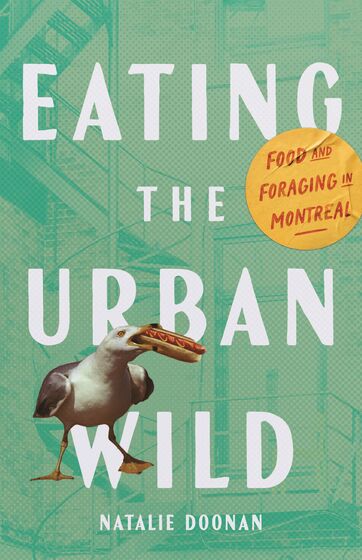
Eating the Urban Wild: Food and Foraging in Montreal
An unconventional and fascinating food tour of the borough of Verdun, inviting us to think differently about eating and consumption.
Author: Natalie Doonan
Sense-Making: New Sensory Methods for Exploring the Past and Imagining Possible Futures
In this highly innovative work, the senses are liberated from the confines of the present to serve as vehicles for accessing other historical periods and imagined futures. Sense-Making builds on the burgeoning field of sensory ethnography by introducing a pair of methodologies—sensory (re)construction and sensorial extrapolation expressly devised to facilitate time-travel.
Authors: Authors: Sheryl Boyle, Genevieve Collins, and David Howes
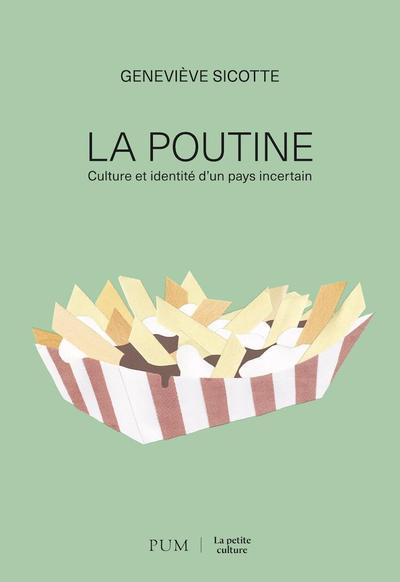
La poutine. Culture et identité d’un pays incertain
En quelques décennies, la poutine a acquis le statut de nouveau plat national québécois. Pourquoi un mets si banal s’impose-t-il aujourd’hui avec tant de force ? Il y a là une énigme que l’auteure décrypte avec finesse dans cet ouvrage. Dans la perspective d’une réflexion sociale et culturelle sur l’aliment, elle propose un parcours transdisciplinaire puisant à une variété de sources : œuvres littéraires, pratiques du quotidien, livres de recettes, discours numériques ou chansons populaires. Elle montre que la poutine cristallise des enjeux cruciaux de l’identité québécoise contemporaine, exprimant dans la cuisine la situation singulière d’un peuple périphérique, minoritaire, résilient et festif, mais qui peine à s’affirmer et qui se réfugie volontiers hors du politique. La poutine est, en ce sens, le plat emblématique d’un pays incertain.
Author: Geneviève Sicotte